
Preparing your site for container delivery
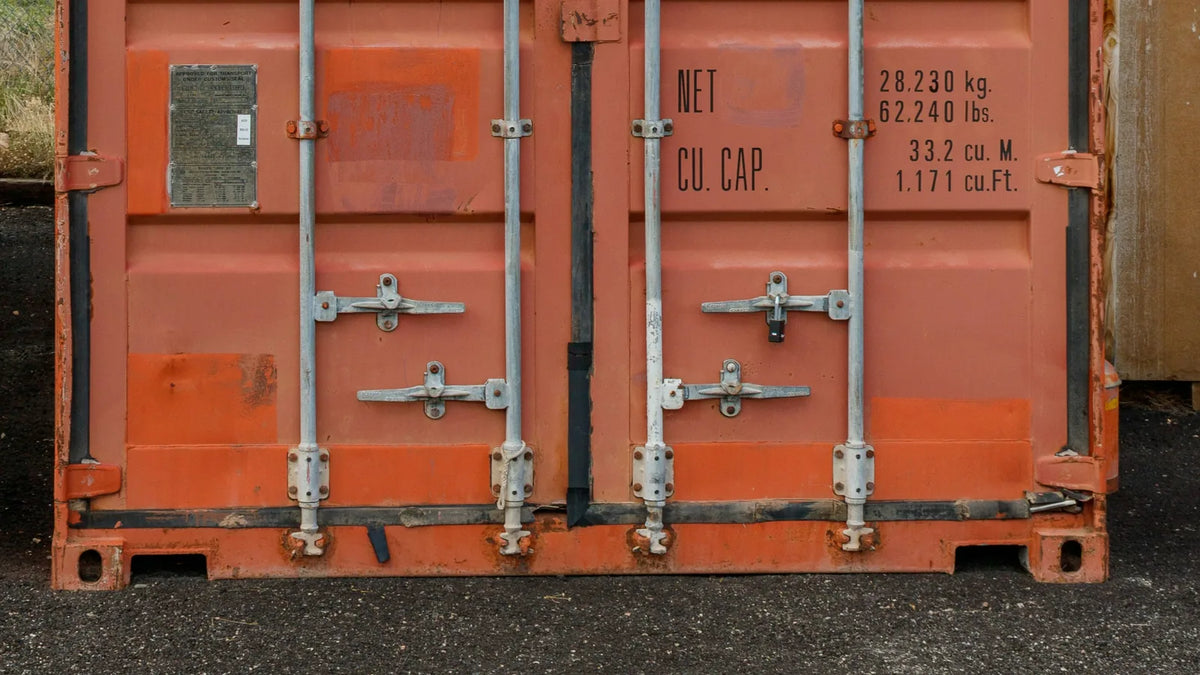
Most delivery problems are site problems: soft ground, a tight gate, a low branch or a box set down slightly out of level. A little preparation before the truck arrives avoids all of them. This guide covers what to check, in the order you should check it.
How a tilt-bed delivery works
Most containers arrive on a tilt-bed truck or a tilt-bed trailer. The driver backs up to the drop spot, tilts the bed, and lets the container slide down as the truck eases forward. The rear end of the box touches the ground first, then the front settles as the truck pulls clear.
That has three consequences for your site. The truck needs room to drive straight forward after the drop. The bed rises well above the container’s height as it tilts. And the ground must hold the weight of a loaded truck as well as the container.
Step 1: choose the spot
Pick where the container will stand before anything else, and think about how you will use it.
- Door direction. The box comes off the truck with its doors facing the truck or away from it, depending on how it was loaded. Tell us which way the doors should face, and we plan the approach to suit.
- Working space. Leave at least 8 ft clear in front of cargo doors for them to swing fully open, plus room to load.
- Drainage. Avoid low spots where water collects. Water under a container causes rust and makes the ground soft for later moves.
- Rules. Check zoning, HOA rules and any permit needs before you choose a spot, especially on residential property.
Step 2: check the approach
Walk the route from the road to the drop spot as if you were driving a long, heavy truck.
Length
As a rough guide, the truck needs a straight run of about 3 times the container length. That is about 60 ft for a 20ft box and about 120 ft for a 40ft box, including space for the truck to pull forward.
Width
Allow about 12 ft of clear width along the route and through gates. Measure gate posts, not just the gates.
Height
Look up. Power lines, phone cables, tree branches, carports and roof overhangs can all block the tilting bed. Allow about 14 to 16 ft of clear height along the route and at the drop spot, more for high cube boxes.
Ground
The route must carry a heavy truck. Gravel drives and firm, dry ground are usually fine. Lawns, septic tanks, fresh fill and wet clay are not. If you are unsure, send us photos.
Step 3: prepare the base
A container carries its weight on its four corner castings. It does not need a poured foundation, but it does need to sit level on firm support. A box that is out of level will twist slightly, and the doors will bind.
Good base options
- Compacted gravel pad. A layer of crushed stone, 4 to 6 in deep, slightly larger than the container. It drains well and suits most sites.
- Concrete pads or blocks. One under each corner, and under the midpoint of each long side for a 40ft. Set them level with each other before delivery.
- Railroad ties or treated timber. Laid across the width under each end. Quick to place and easy to adjust.
- Existing concrete or asphalt. Fine if level and thick enough. Use timber pads to protect asphalt from the corner castings.
Tell us the type and spacing of your supports when you book, so the driver can line the box up with them.
Step 4: send us the details
Before we book a delivery, a specialist reviews your site. The quickest way is to send:
- A photo from the road looking toward the drop spot.
- A photo from the drop spot looking back toward the road.
- A photo of any gate, overhead line or tight turn.
- The direction you want the doors to face.
- Any access times, gate codes or site rules.
A simple sketch with distances is also helpful. If something looks tight, we will tell you before the truck sets out, not after.
Step 5: on delivery day
- Move vehicles, materials and anything else from the approach and the drop spot.
- Be on site, or have someone there you trust, to show the driver the exact spot.
- Keep children, pets and bystanders well clear while the truck is working.
- Let the driver decide on safety. If the driver judges a spot unsafe, agree a nearby alternative.
The driver will call ahead with an arrival estimate.
Step 6: inspect before you sign
Once the box is down, check it before the driver leaves. Open and close the doors and test the locking bars. Step inside, close the doors and look for daylight. Check the floor for soft spots. Note anything wrong on the paperwork and take photos.
For more on what to expect from each condition grade, see our grades guide, or read the delivery service page for pricing and options. If you are not sure your site is ready, send us photos and we will check it with you.